Have you heard of Chinese face mapping?
One of the most fascinating parts of Traditional Chinese Medicine (TCM) is the idea that your face isn’t just skin - it’s a reflection of the entire internal landscape of your body.
In TCM, every organ system is connected through networks of Qi (energy), blood, and fluids. These pathways run throughout the body and end on the face. That means shifts inside - digestion, hormones, stress, hydration, sleep - can show up externally long before you feel “symptoms.”
Let’s break it down:
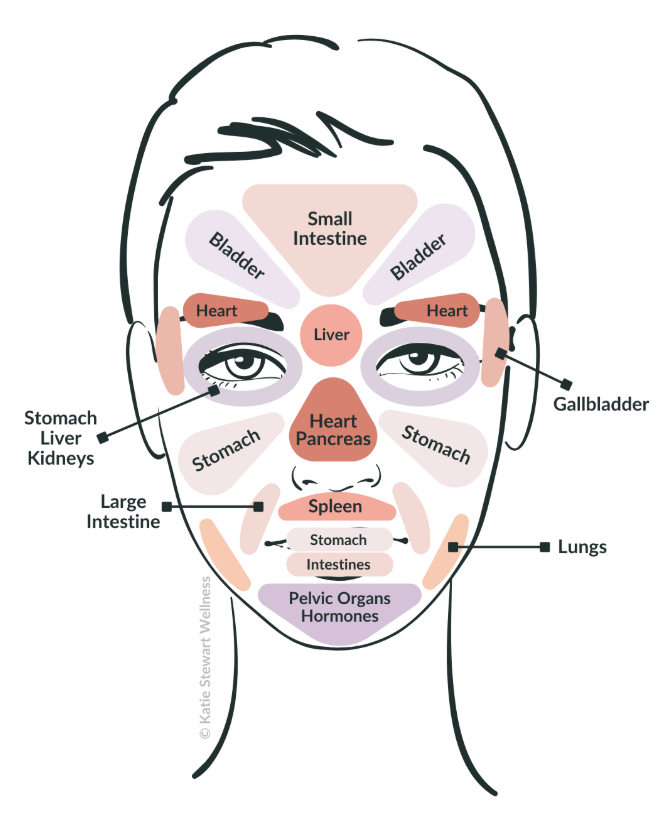
The forehead
In TCM, the forehead is linked to the digestive system and the Shen (your mind/spirit).
What shows up here:
Tiny bumps
Texture
Dullness
Stress breakouts
Possible TCM interpretations:
Slow digestion
Irregular meals
Poor sleep
Too much screen time
Stress
What you can do about it:
Limit doom scrolling before bed
Earlier bedtime
Fiber-rich breakfast
Warm water in the morning
Between the brows
TCM connects this area to the liver!
What shows up here:
One stubborn pimple (the worst)
Deepening of the 11 lines
Tension/tightness
Possible TCM interpretations:
Not enough emotional off-loading
Stress/irritability
Hormonal fluctuations
Overstimulation (caffeine, alcohol, heavy foods)
What you can do about it:
Reduce alcohol and fried food intake
Journal and meditate everyday!
Light stretching and walking after meals
Load up on bitter greens (arugula, dandelion, kale)
Cheeks
The cheeks are linked to the lungs and the external environment in TCM.
What shows up here:
Redness
Sensitivity
Breakouts or dullness
Texture from allergens/pollution
Possible TCM interpretations:
Low hydration
Poor air quality
Seasonal allergies
Emotional heaviness (lungs = grief in TCM)
Overheating from spicy or warming foods
What you can do about it:
Deep belly breathing
Gentle movement (walking!)
Purifying indoor air
Hydrating and cooling foods (cucumber, watermelon, coconut water)
Nose
The nose is associated with the heart and stomach in TCM.
What shows up here:
Redness around the nostrils
Blackheads
Oiliness
Possible TCM interpretations:
Digestive inflammation (spicy foods, stress eating)
Overheating in the body
Poor circulation
What you can do about it:
Warm meals, not super spicy
Manage stress
Gentle cardio to boost circulation
Chin and jawline
This is the most famous zone…
What shows up here:
Cyclical breakouts
Congestion
Deep, painful pimples
Possible TCM interpretations:
Hormonal fluctuations
Stress
Poor sleep
Eating late at night
Liver energy stagnation
What you can do about it:
Stabilize your blood sugar
Reduce caffeine, especially around your luteal phase
Warm, easy-to-digest foods
More rest during PMS
Support your liver with leafy greens and warm lemon water
Under-eyes
TCM connects the under-eyes to the kidneys, which reflect hydration and life force.
What shows up here:
Puffiness
Darkness
Hollowness
Fine lines when dehydrated
Possible TCM interpretations:
Low hydration
High stress
Poor sleep quality
Overworking
What you can do about it:
Sip water consistently, not all at once
Warm water > iced drinks
Prioritize sleep
Mindful breathing when stressed
So…is Chinese face mapping real?
TCM face mapping isn’t a medical diagnostic tool. It’s a wellness lens - a way to understand how lifestyle, digestion, stress, sleep, and emotions show up on our skin. Dermatology focuses on the skin itself, and TCM focuses more on the mind-body connection. And when you put both together, you get a 360 degree view of your skin and your overall well-being :)